Obtén acceso al PDF gratuito

Desbloque el podel del Prompt Engineering 101
Master the art of prompt engineering and supercharge your AI projects with our comprehensive guide. Learn the secrets behind crafting effective prompts.


Master the art of prompt engineering and supercharge your AI projects with our comprehensive guide. Learn the secrets behind crafting effective prompts.
How technical writers are using AI today—and what’s still holding teams back.
Insights from documentation professionals reveal where AI is improving productivity, where trust is still low, and what documentation teams want next.
Artificial intelligence is rapidly becoming part of the technical documentation workflow. From drafting and editing content to summarizing complex information, AI tools are starting to reshape how documentation teams work.
To understand how this transformation is unfolding, the 2026 State of AI in Technical Documentation survey gathered insights from around 400 professionals involved in technical documentation across a wide range of industries.
The survey reveals a field that is actively experimenting with AI while still navigating challenges related to trust, governance, and integration with existing documentation workflows.


AI for technical writer teams, made easy. Promptitude is an AI platform designed to help documentation teams streamline content creation. Let it handle first drafts and variants while you focus on accuracy, compliance, and delivering a great user experience. Upload or connect your existing documentation & style guides, and quickly generate high-quality, on-brand outputs for release notes, help articles, API docs, and other common doc types — all within your existing workflow. Start your free trial!
Founded by Scott Abel in 2003, The Content Wrangler is a digital media company that exists to help organizations adopt the tools, technologies, and techniques they need to connect content to customers. TheContentWrangler.com, covers the people, methods, standards, ideas and trends that matter in the content industry today.
One notable characteristic of the respondents is the depth of experience in the field. Nearly half of participants have spent more than two decades working in technical documentation, meaning the insights reflect the perspective of seasoned professionals managing complex documentation ecosystems.

have 21+ years in technical documentation
have 11–20 years of experience
have 6–10 years
have 2–5 years
have less than one year
We examined how deeply AI has penetrated everyday documentation work—from regular use, to occasional use, to teams that are still only experimenting or not using AI at all.
Overall, more than three quarters of respondents have already incorporated AI into their documentation work in some form. This suggests that AI is moving from experimentation toward practical adoption across documentation teams.

use AI regularly
use AI occasionally
have experimented but do not yet use AI in production
are interested but not using AI yet
do not plan to use AI
When it comes to tooling, documentation professionals are currently relying primarily on general-purpose AI assistants. A highly experienced cohort (nearly half with 21+ years in the field) uses AI widely, but primarily for language‑level work such as editing, rewriting, drafting, and summarization.
Only 9.81% report not currently using AI tools at all for documentation tasks. This indicates that many organizations are building AI workflows around general AI tools while documentation platforms gradually integrate AI capabilities.Although nearly half of respondents have 21+ years of experience, most currently use AI mainly for language-level tasks such as editing, rewriting, drafting, and summarization. This suggests that many teams are still relying on general AI tools while documentation platforms continue integrating AI capabilities.
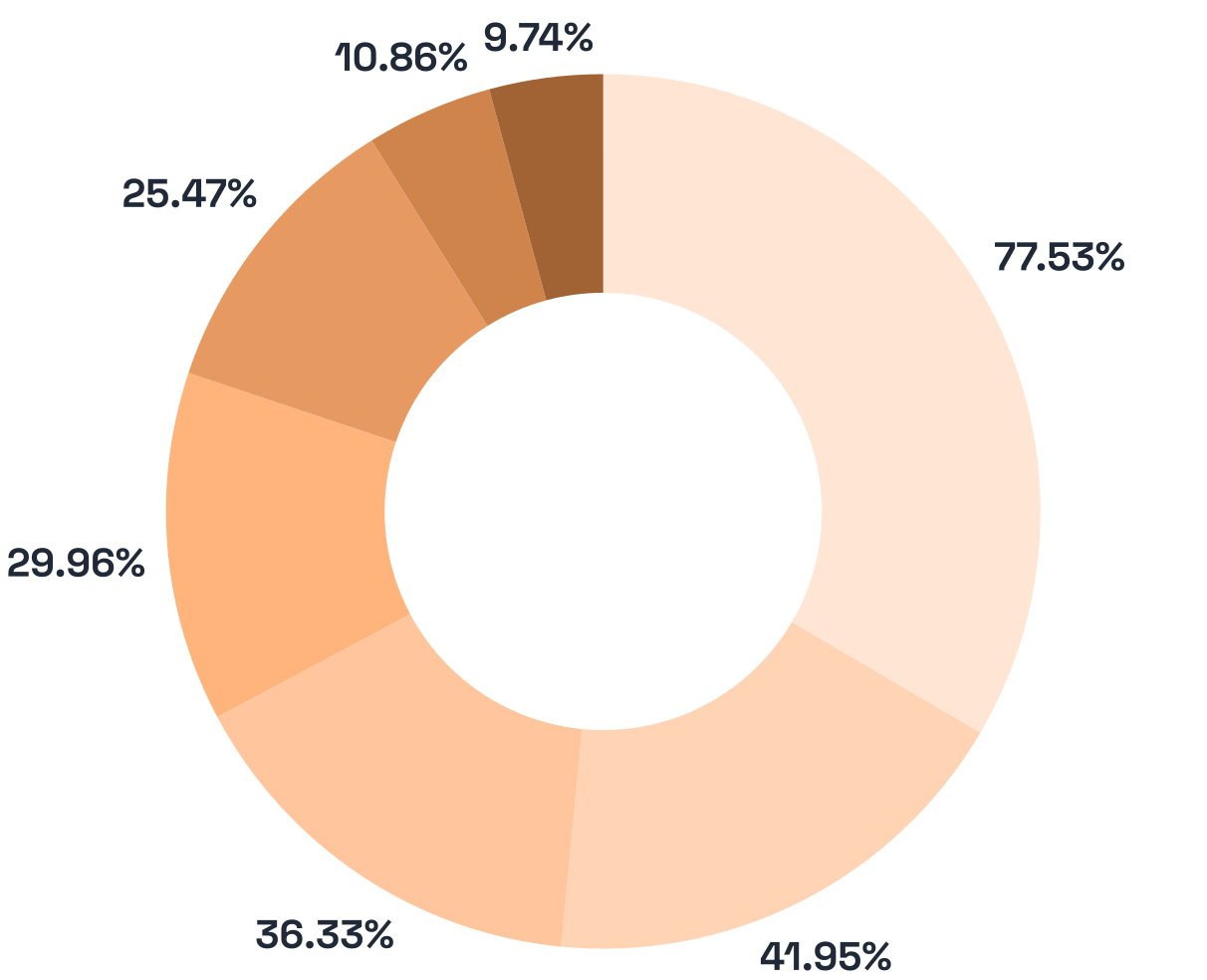
use general-purpose AI tools (such as conversational AI assistants)
use internally developed AI tools
use AI features embedded in documentation platforms (CCMS, help platforms, IDEs)
use AI tools for search, summarization, or content analysis
use AI writing assistants
use image or video generation tools
AI is most frequently used as a writing and editing assistant rather than a fully automated documentation system.
As you incorporate AI into your writing process, treat it like you would any other new member of your team. First, teach it the ropes. New-to-your-team writers always want to look at examples of the right way to write for your company. Experienced tech writers know that not all of your published content meets your own standards. Legacy content can frequently be a mash-up from a long history of unrelated features and tangled writing styles from cross-functional (if not dysfunctional) product teams that got tossed out into the village square to meet a deadline... See more in the full report


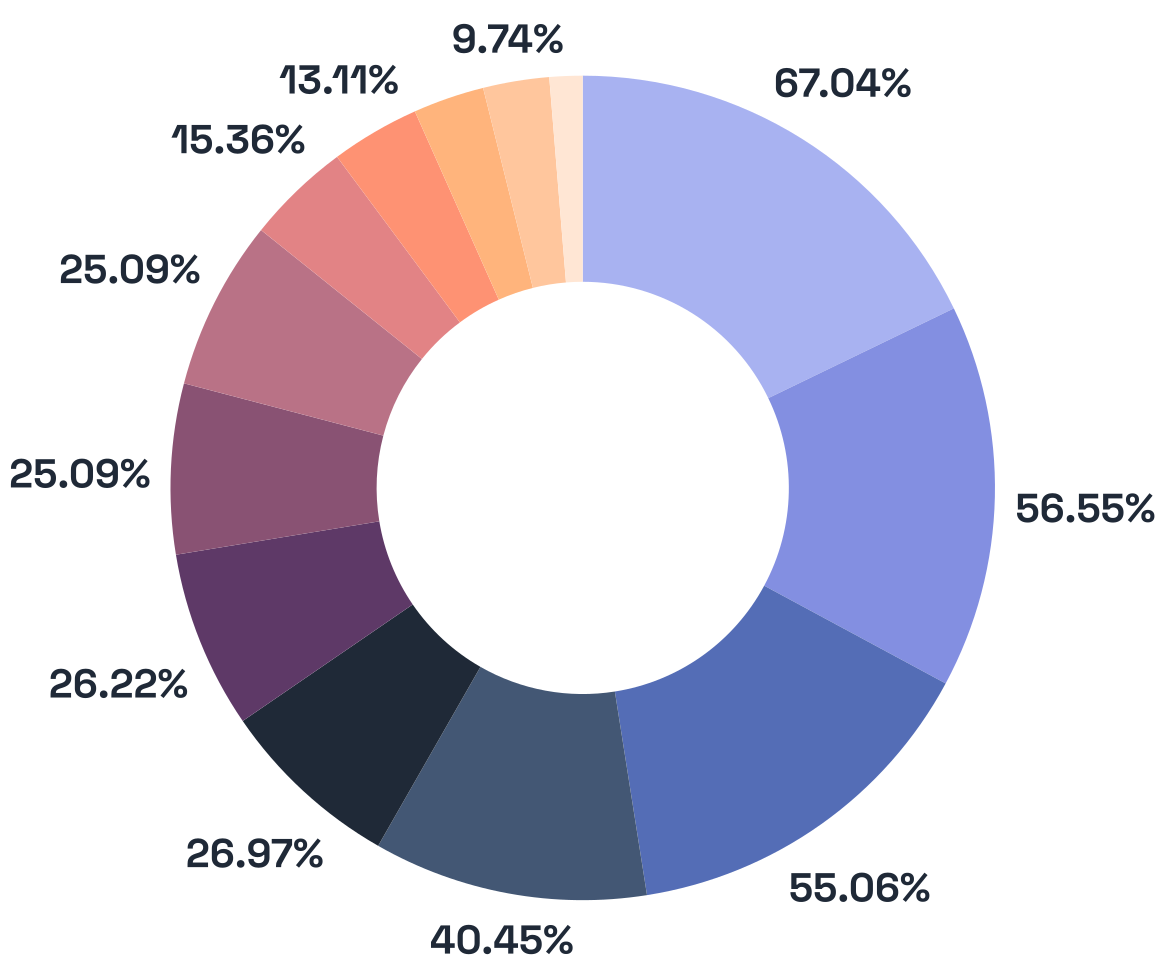
editing content for clarity, tone, or consistency
drafting new documentation
rewriting existing documentation
summarizing complex content for customers
terminology or taxonomy work
content conversion between formats
generating examples, walkthroughs, or explanations
structuring unstructured content
metadata tagging or content classification
image generation
video generation
While writers currently use AI mainly for editing and drafting, their future expectations are broader and more operational.
When we shifted from print to PDFs, or from PDFs to web pages, did inaccurate content become accurate? No. A new delivery format never fixes fundamental content deficiencies.
The same logic applies to AI: feeding inaccurate or outdated content into a large language model (LLM) produces the same bad information, just remixed to sound authoritative. Many organizations still can't get accurate information to customers and staff through the channels that existed before AI. Adding AI on top doesn't solve that challenge... See more in the full report


automated metadata tagging and content classification
generating examples, code explanations, or walkthroughs
editing for clarity and structuring unstructured content
terminology and taxonomy management
drafting new documentation
content reuse
rewriting and converting content
interested in AI image generation
interested in AI video generation
Despite widespread experimentation, many technical writers remain cautious about the accuracy of AI-generated outputs.
Accuracy anxiety is a reasonable response to a real problem: GenAIs get things wrong. Most of their content failures share a common cause: the model was asked to do more than it’s capable of. LLMs are probabilistic. The difference between a search engine that returns the source data and a generator that can approximate human creations based on the data is a dash of chaos in the math. GenAIs are educated guessing machines... See more in the full report


very confident
somewhat confident
neutral
somewhat unconfident
very unconfident
Encouragingly, most organizations appear open to exploring AI in documentation.
Great leaders are not defined by instinct alone – they are defined by the quality of their decisions. And the quality of their decisions is only as strong as the information behind them.
That places a profound responsibility on those of us in documentation. We are not support functions – we are stewards of clarity, accuracy, and truth. We are the ones who transform complexity into understanding, and understanding into action... See more in the full report

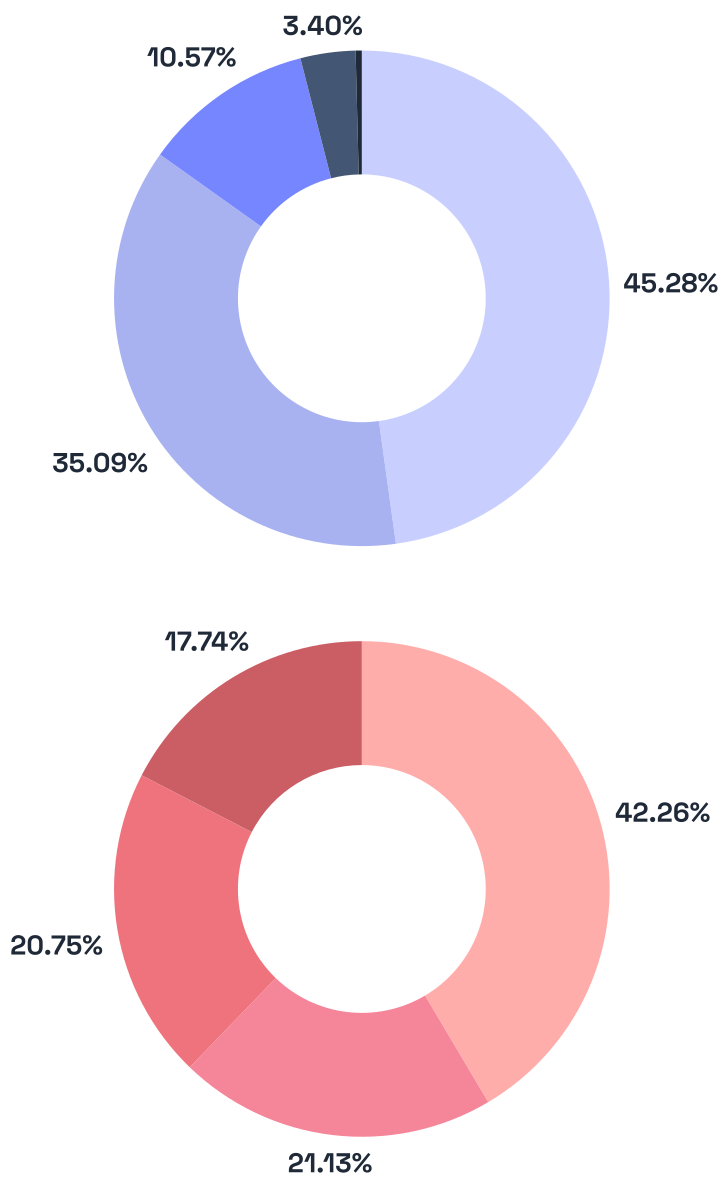
strongly supportive and proactive
supportive but cautious
neutral
resistant
actively discouraging AI use
formal and documented policies
informal guidance
policies currently being developed
no guidance yet
Despite concerns around accuracy, AI is already delivering measurable improvements for many documentation teams.
The survey data suggests that AI is already helping many technical documentation teams work faster, so the smartest next step is to use it where it can deliver the most immediate and reliable gains.
Most people assume AI accelerates the writing process, but that is just people who think writing is easy. As a technical communicator, you know writing is a craft honed over years of experience... See more in the full report


report significant productivity improvements
report moderate improvements
report mixed results
report little or no impact
Overall, nearly 69% of respondents report productivity gains from AI.
What’s holding documentation teams back from using AI more extensively? Respondents identified the specific obstacles—from accuracy and security to tooling and skills—that limit deeper AI use in their organizations.
Stop assuming AI adoption will spread just because you licensed a tool and announced it in a meeting. It will not. People avoid AI when it invents facts, mishandles sensitive information, disrupts established workflows, and arrives with all the practical guidance of a refrigerator magnet... See more in the full report


accuracy and hallucination concerns
security and confidentiality restrictions
poor integration with existing tools
lack of training or guidance
legal and compliance constraints
Additional concerns include lack of structured content, limited budgets, and uncertainty about AI value.
What core documentation problems remain, regardless of AI? We looked beyond AI to the structural, process, and workload challenges that continue to shape documentation work.
I see technical communicators as club DJs paying attention to the song playing through the speakers while simultaneously monitoring the next song through headphones. The current song represents documentation tools and workflows. The next song signifies requirements and updates coming from subject matter experts. If you have used automated music matching tools like Apple Music's AutoMix, you know this is a problem AI cannot fix, and in some cases will make worse... See more in the full report

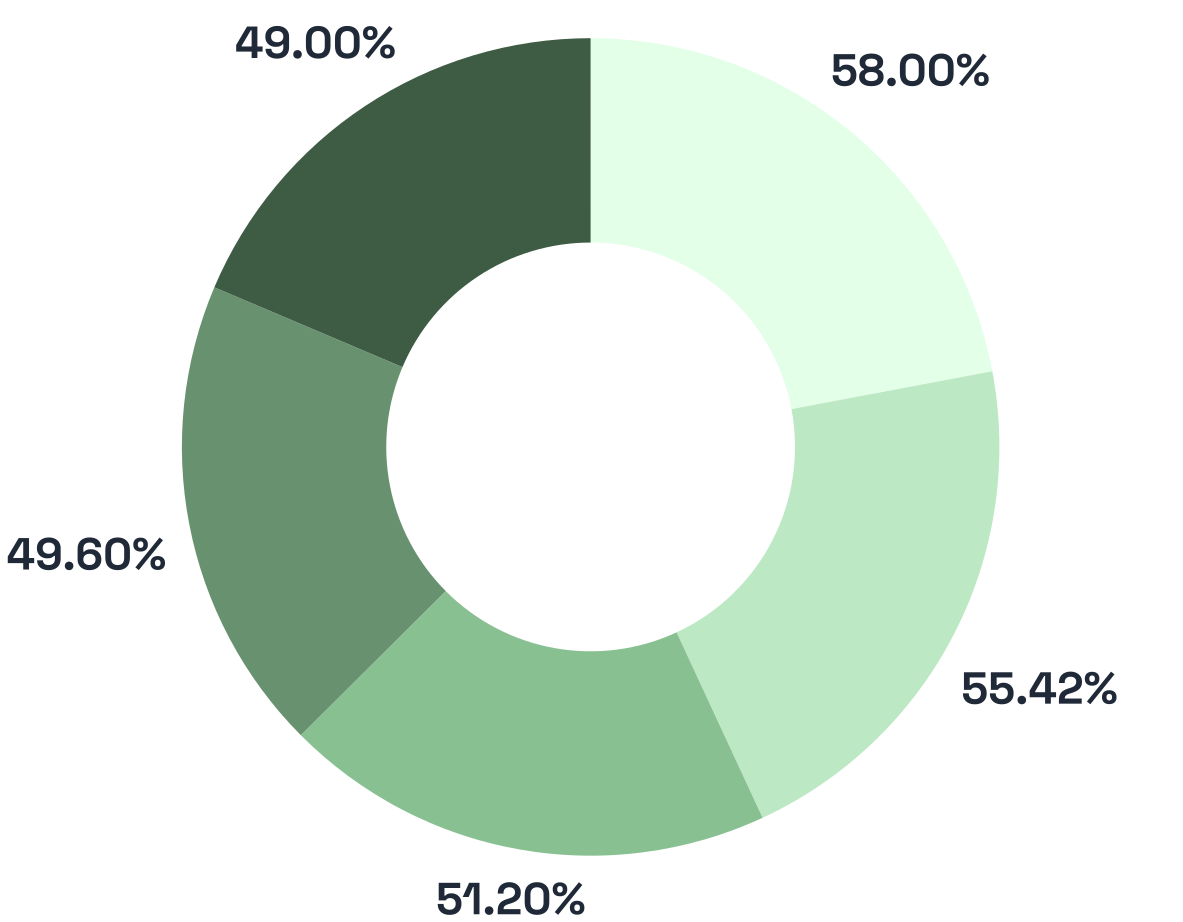
Other challenges include proving the value of documentation, fragmented tooling, and limited organizational support.These pressures help explain why many teams are exploring AI-assisted documentation workflows to scale their work.
difficulty keeping documentation updated with product changes
lack of time and unrealistic workloads
balancing multiple projects and deadlines
late involvement in the product lifecycle
legacy content and poor content structure


AI has become part of everyday documentation work, especially for seasoned tech writers who have seen enough software trends come and go to greet each new one with one eyebrow raised. Even so, AI’s impact is still boxed in by familiar problems: trust, governance, accuracy concerns, weak integration, and the sort of long-running operational messes no chatbot is going to sweep up with a tiny digital broom… Read more in the full report
At the same time, practitioners are already looking beyond basic writing assistance. Many respondents want AI to support metadata tagging, content classification, terminology management, content structuring, and the generation of examples or walkthroughs. This signals an emerging shift toward AI-supported content operations, where AI helps scale documentation systems rather than simply accelerating writing tasks… Read more in the full report
AI has clearly become part of everyday documentation work, particularly among experienced technical writers. However, its impact remains constrained by factors such as trust, governance, accuracy concerns, integration limitations, and long-standing operational challenges that AI alone cannot solve.The survey shows that AI has entered the technical documentation mainstream, with adoption driven largely by experienced professionals experimenting with new ways to improve productivity. Yet the ecosystem around AI use is still maturing. Confidence in AI-generated output remains moderate, and concerns about hallucinations, security, and compliance continue to limit deeper adoption.Today, AI is primarily used at the individual contributor level, most often through general-purpose AI tools and internal copilots. Technical writers rely on AI mainly for editing, rewriting, drafting, and summarizing content, where it can provide immediate productivity gains without introducing significant workflow risk.

Stay ahead with practical guides, industry trends, and expert advice on making AI work for your business. Fresh content weekly to help you master AI collaboration and boost team productivity!










.png)


%20%26%20Content%20Storage.png)