Zugriff auf kostenloses PDF erhalten

Entfesseln Sie die Kraft von Prompt Engineering 101
Master the art of prompt engineering and supercharge your AI projects with our comprehensive guide. Learn the secrets behind crafting effective prompts.


Master the art of prompt engineering and supercharge your AI projects with our comprehensive guide. Learn the secrets behind crafting effective prompts.
Ungoverned AI is already in your content. Here's what to do about it.
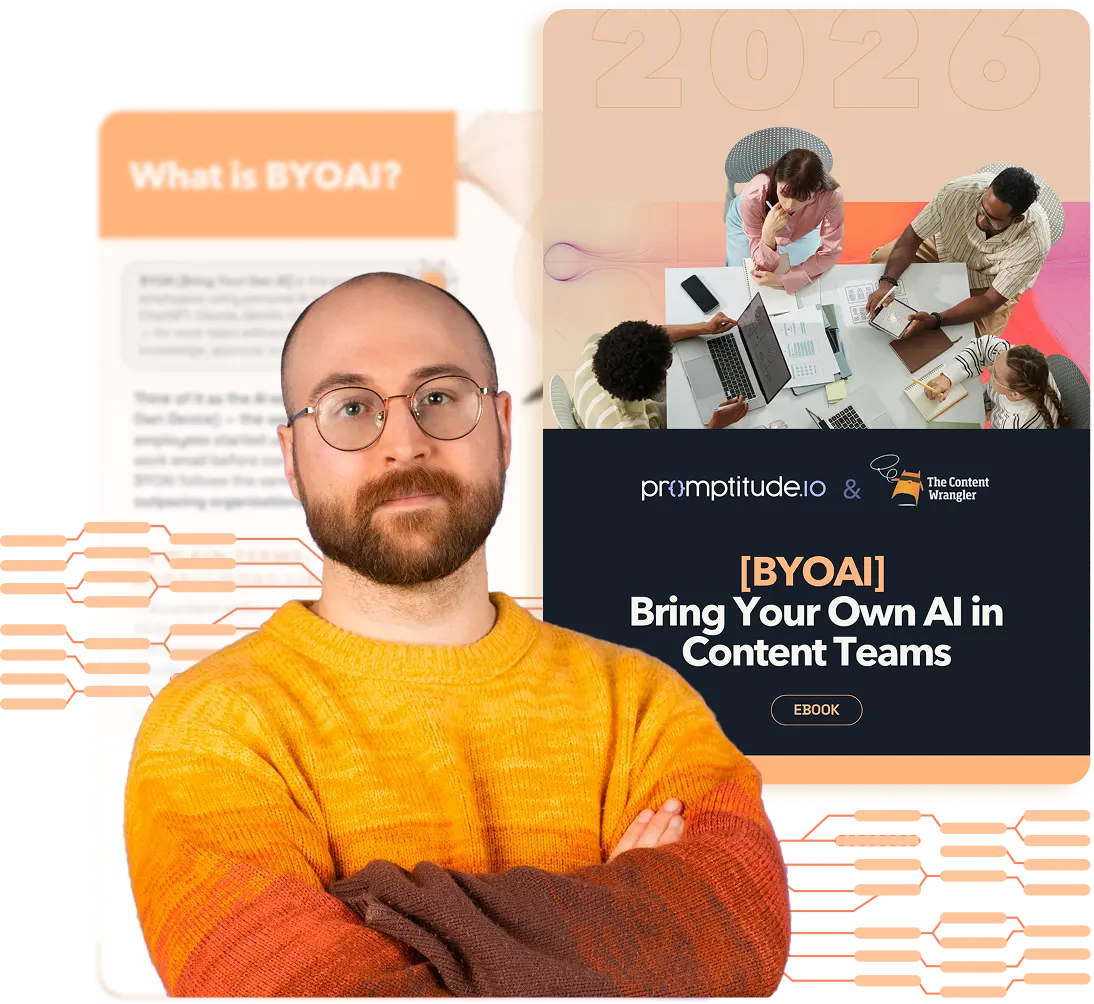
Employees across content teams are using personal AI tools without organizational oversight, policy, or governance. Based on the 2026 AI Use in Technical Documentation Survey and expert insights from content strategy practitioners, this ebook maps the risks, reframes the problem, and delivers a practical path forward.
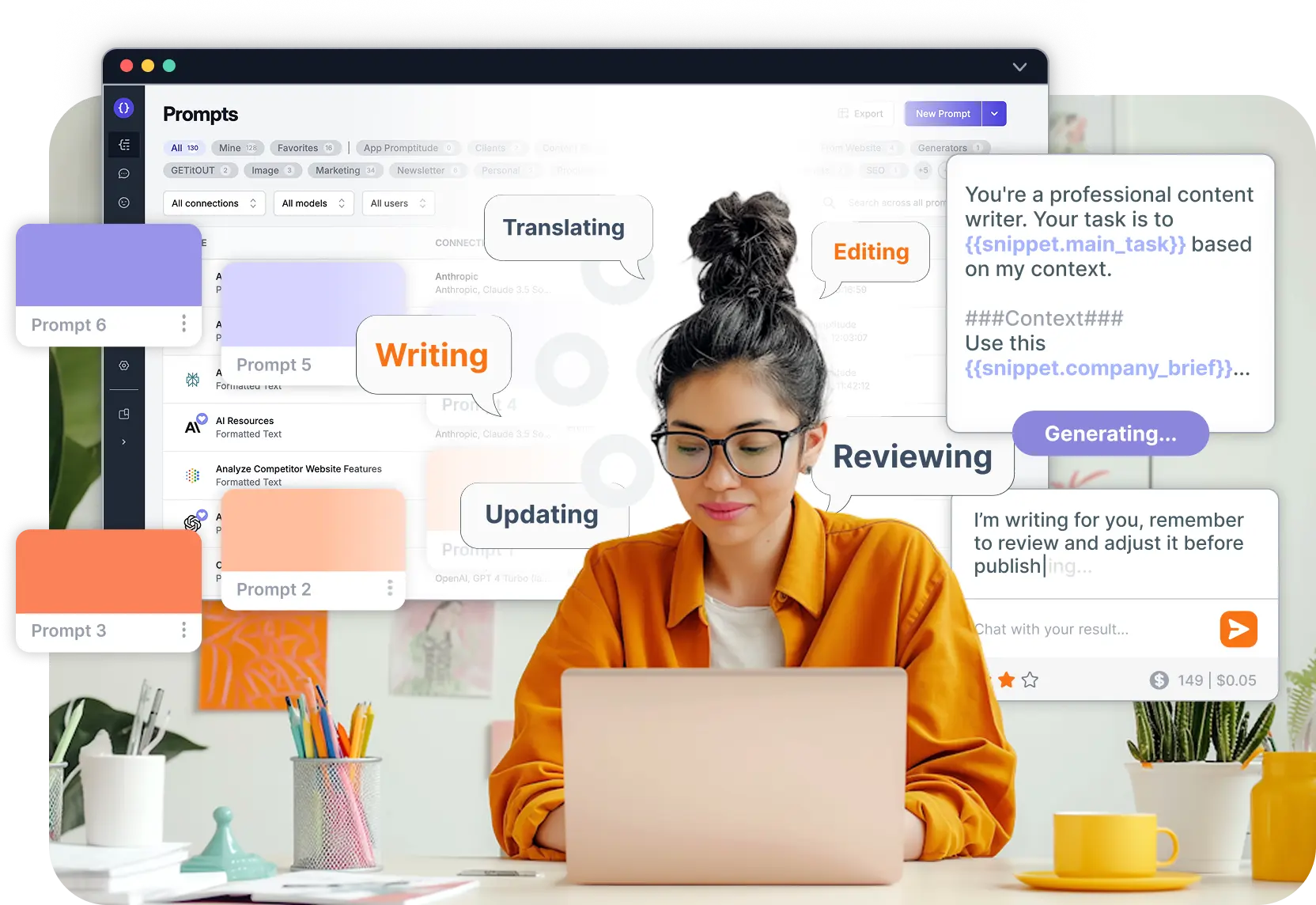
Artificial intelligence is rapidly becoming part of the content team's workflow, from drafting and editing to summarizing complex information and generating metadata. But most of this adoption is happening without organizational oversight, shared standards, or any governing policy.
To understand how this is unfolding in practice, the 2026 AI Use in Technical Documentation Survey gathered insights from around 400 professionals across a wide range of industries. The findings reveal a field that is actively experimenting with AI while still navigating challenges related to trust, governance, and integration with existing workflows.
This ebook — co-produced by Promptitude and The Content Wrangler — maps the risks of ungoverned BYOAI, reframes the problem, and delivers a practical governance roadmap content teams can act on immediately.

AI for content teams, made easy. Promptitude is an AI platform designed to help content and documentation teams streamline creation while maintaining quality, consistency, and governance. Upload your style guides and best-practice examples, build a shared prompt library your whole team pulls from, and generate on-brand outputs across formats — within your existing workflow. Start your free trial at promptitude.io — 50,000 tokens included, no strings attached.
Founded by Scott Abel in 2003, The Content Wrangler is a digital media company that exists to help organizations adopt the tools, technologies, and techniques they need to connect content to customers. thecontentwrangler.com covers the people, methods, standards, ideas, and trends that matter in the content industry today.
BYOAI (Bring Your Own AI) is the practice of employees using personal AI tools — ChatGPT, Claude, Gemini, Copilot, and others — for work tasks without their organization’s knowledge, approval, or oversight.
It mirrors the BYOD wave that swept through IT departments when employees started using personal smartphones for work email before companies had mobile policies. BYOAI follows the same pattern: technology adoption outpacing organizational readiness.
Organizations have no AI guidance whatsoever
Still developing policies
Have formal policies — effectiveness unknown
Support AI use but have no governing policy
Report some productivity gain — results vary widely
Documentation quality is no longer just a professional standard. It is an AI readiness requirement. Every AI-powered customer experience your brand delivers runs on top of your content.


Ungoverned AI adoption does not announce itself. It shows up in a help article that sounds different from the one published last month, a product description that is technically accurate but off-brand, a team whose AI-assisted output ranges from excellent to mediocre with no clear explanation for the gap. These are the predictable result of a team using AI without shared standards.

Like in any operating model, AI works when there is clear governance. That means clear processes, clear boundaries for use of AI tools, and clear expectations of how AI is to be used. The potential repercussions of lack of change management, operational controls, and policies clearly stated by senior management. By the time that inconsistencies and errors creep in, the operational problems have taken root, and it will be hard to course correct. See more in the full report

These risks originate outside your team — in the systems your employees are connecting to, the regulations taking effect, and the AI platforms your workflows depend on. .By the time they become visible, the cost of addressing them is significantly higher than the cost of preventing them.

Today’s AI systems attempt to produce knowledge, explain relationships, and use context to adapt their responses. Models that lack explicit semantic infrastructure spend unnecessary computation processing duplicated, contradictory, or irrelevant information that all increase the possibility of error while bloating the cost. Hitting this “economic wall” now that the cost of models is increasingly based on token counts has rapidly led to efforts to make information “AI-ready” in ways that are familiar to information architects and knowledge management specialists. See more in the full report

Mandating a single tool resolves the policy question of which AI people are permitted to use — but leaves the quality and consistency problem entirely intact. The variable is the prompt, not the platform.
The Problem:
Writer A
"Write a product description for our new feature."
Writer B
"Two-paragraph product description, B2B SaaS tone, business outcome focused, brand voice guide included, with example..."
Same tool. Dramatically different output. The variable is the prompt.
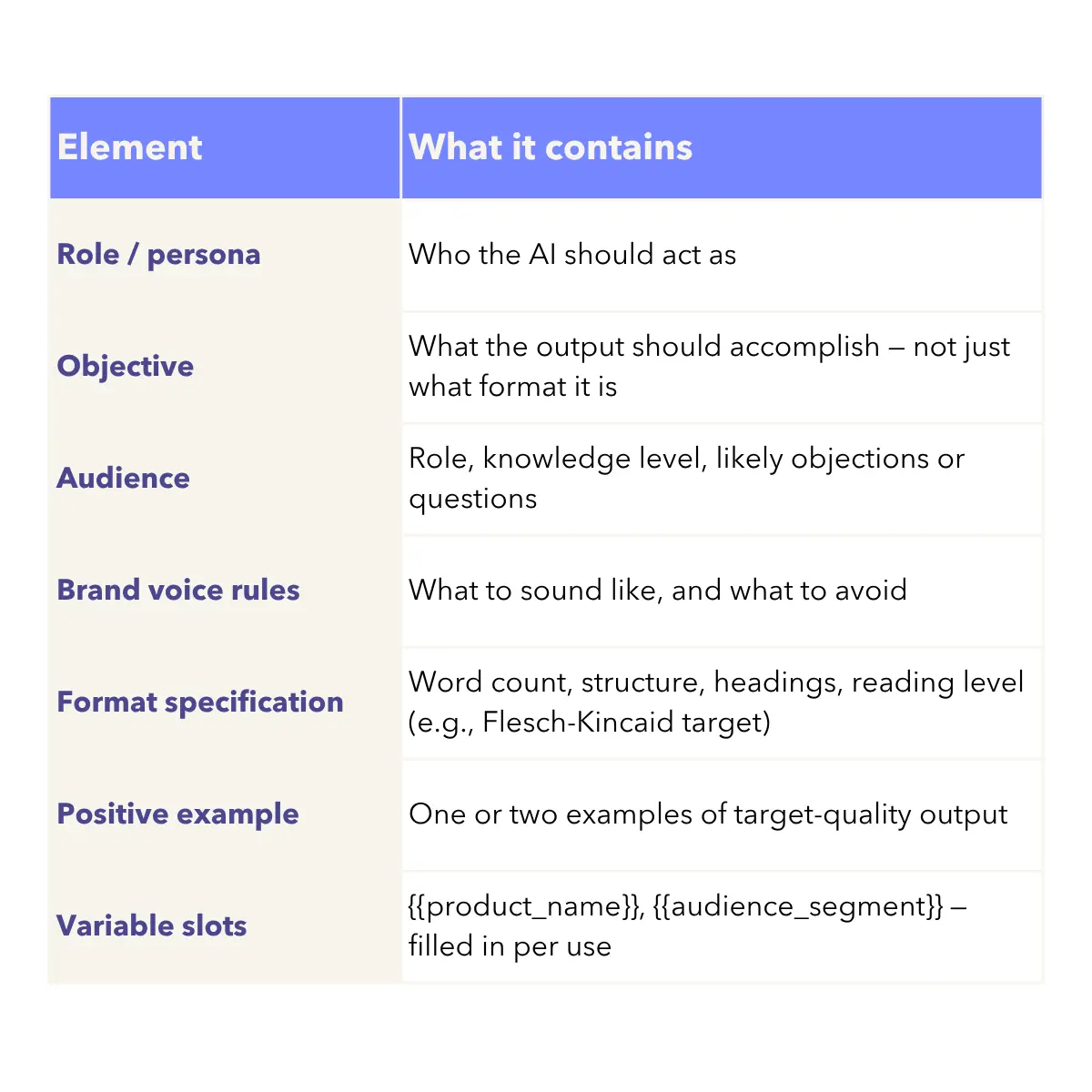
Start with your team's best informal prompts. Structure them — role, objective, audience, voice, format, example — and make them centrally accessible.
The variation isn't coming from the tools. It's coming from the prompts. The same good prompt, used across different AI tools, produces remarkably consistent output.

Find out which tools your team uses, for what tasks, and which prompts are already working
Assemble current voice guidelines, approved terminology, and concrete examples before building anything
Define approved tools, data policy, and review process before an incident forces your hand
Create shared prompt templates for the most common use cases; assign a prompt owner to each
Define success criteria first; iterate based on what the data shows
What not to do
Build the prompt library before you formalize the policy. Tangible results from shared prompts create the internal case for broader governance investment.
Structured content plays a significant role in building reliable AI systems and managing total AI risk. It reduces the overhead of governance and increases content deployment capability.
With structured content, your organization can reuse content rather than duplicating it, reducing the risk that a missed update turns into a hallucination.
And that's just the most basic case, structured content touches almost every point of friction in content operations in a way that strengthens your systems and produces better outcomes. See more in the full report



This eBook brings together perspectives from content strategy practitioners, technical communication leaders, and AI governance specialists.
For a technical documentation audience, the biggest BYOAI risks today are: leakage of proprietary content into public models; publication of hallucinated information; loss of content governance controls; untracked AI-generated documentation entering production systems; and inability to demonstrate provenance and accountability for published content. Those risks intersect directly with content operations, documentation governance, and knowledge management — the areas where technical communicators increasingly have an opportunity to lead rather than simply consume AI tools... Read more in the full ebook
Most teams trying to fix their BYOAI problem reach for a tool mandate. It is the wrong lever. The variation in output is not coming from the tools — it is coming from the prompts. Ten writers using the same AI platform, each composing their own prompts from memory and habit, will produce ten different versions of your brand voice. The fix is not standardizing the tool. It is building a shared prompt foundation that every writer pulls from — one that carries your style, your terminology, and your standards into every AI interaction, regardless of which model is running underneath... Read more in the full ebook
AI has clearly become part of everyday documentation work, particularly among experienced technical writers. However, its impact remains constrained by factors such as trust, governance, accuracy concerns, integration limitations, and long-standing operational challenges that AI alone cannot solve.The survey shows that AI has entered the technical documentation mainstream, with adoption driven largely by experienced professionals experimenting with new ways to improve productivity. Yet the ecosystem around AI use is still maturing. Confidence in AI-generated output remains moderate, and concerns about hallucinations, security, and compliance continue to limit deeper adoption.Today, AI is primarily used at the individual contributor level, most often through general-purpose AI tools and internal copilots. Technical writers rely on AI mainly for editing, rewriting, drafting, and summarizing content, where it can provide immediate productivity gains without introducing significant workflow risk.

Stay ahead with practical guides, industry trends, and expert advice on making AI work for your business. Fresh content weekly to help you master AI collaboration and boost team productivity!







.png)

.png)

%20%26%20Content%20Storage.png)