Zugriff auf kostenloses PDF erhalten

Entfesseln Sie die Kraft von Prompt Engineering 101
Master the art of prompt engineering and supercharge your AI projects with our comprehensive guide. Learn the secrets behind crafting effective prompts.


Master the art of prompt engineering and supercharge your AI projects with our comprehensive guide. Learn the secrets behind crafting effective prompts.
.png)
Flows in Promptitude are no-code sequences of connected steps — prompts, tool integrations, or (soon) conditional steps — that run one after another, passing output from one step as input to the next. They let you automate multi-stage AI tasks like content pipelines or research summaries without writing any code, currently up to 10 steps per Flow in Beta.
Key points:
Ready to unlock the full potential of your AI workflows and stay ahead in the fast-evolving AI landscape? While individual prompts and AI models are powerful on their own, the real magic happens when you connect multiple AI operations to create seamless automation. That’s why we’re excited to introduce Flows — our new no-code solution designed for building sophisticated AI workflows by connecting your prompts and tools into seamless automation sequences.
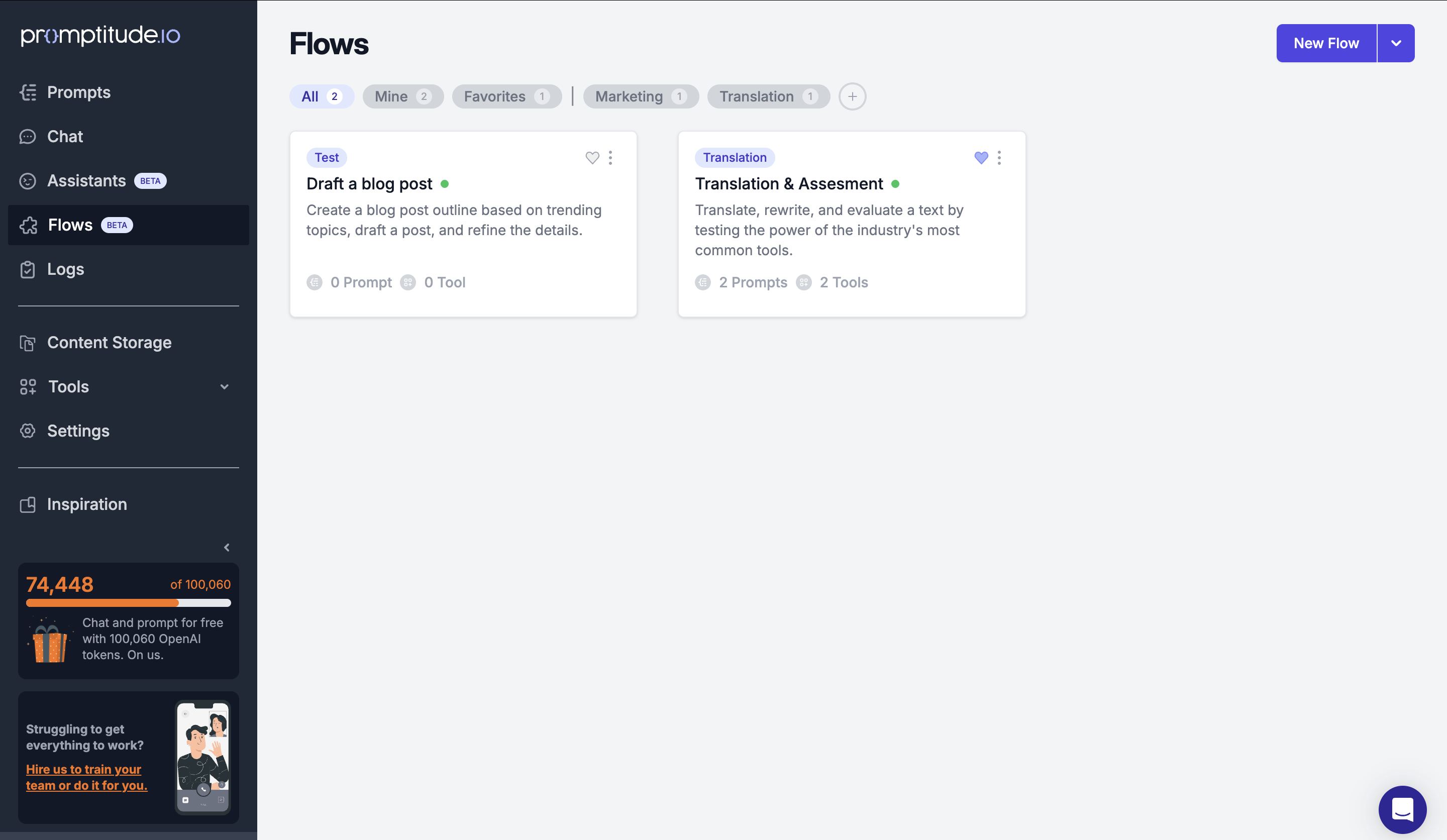
Flows in Promptitude are sequences of connected steps that automate repetitive tasks by executing one action after another in a predefined order. Think of flows as assembly lines for your AI tasks—each station performs a specific function, passing the results to the next station until you get your final, refined output.
Each step in a Flow can be:
With no-code AI workflow automation, Flows empowers both beginners and experts to build comprehensive AI systems that process inputs through multiple stages—enhancing productivity and efficiency— all without writing a single line of code. Now, you can connect AI prompts and tools to streamline your operations and maximize your results, transforming the way you work with AI models.
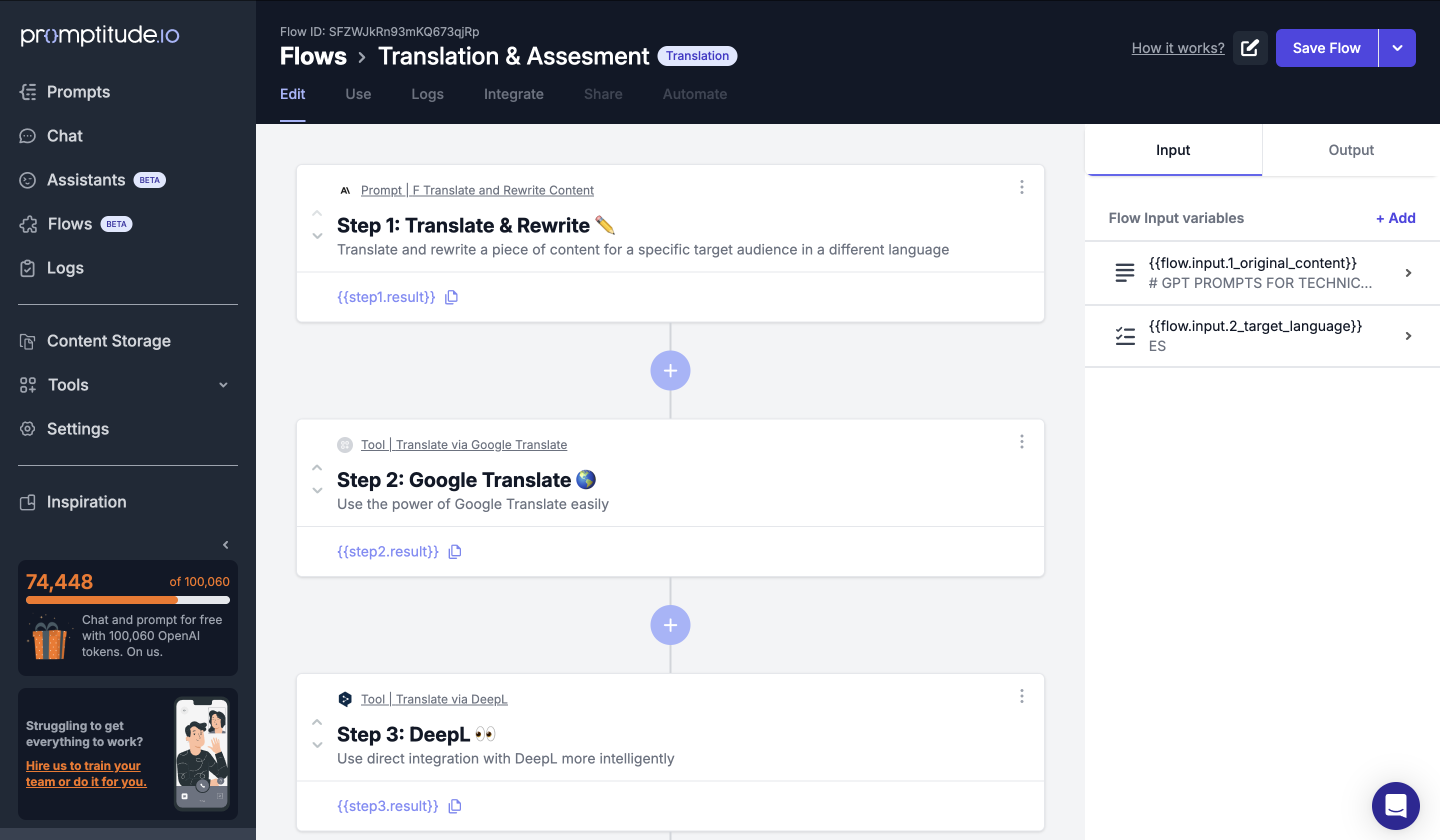
Looking for ways to learn how to build AI workflows without coding and automate your AI tasks more efficiently? Flows solve several critical challenges that prompt engineers and AI enthusiasts face daily:
The power of Flows lies in their ability to pass data seamlessly between steps. The output from one prompt becomes the input for the next, creating a continuous chain of AI processing that produces more refined, accurate results than any single prompt could achieve alone.
For AI enthusiasts and prompt engineers, Flows open up exciting new possibilities in building AI workflows without coding:
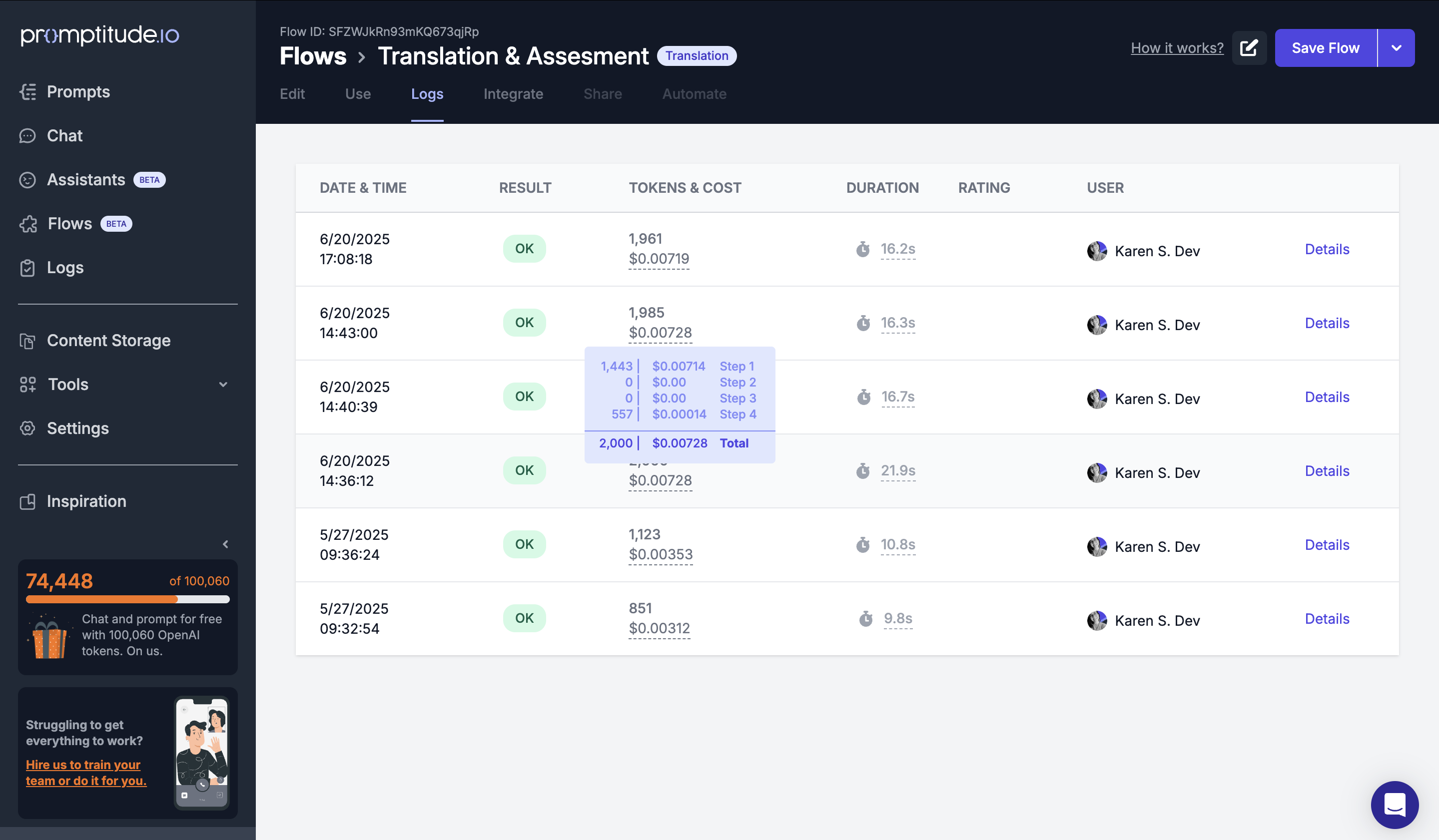
Creating your first Flow is straightforward:
1. Navigate to the Flows section in your Promptitude dashboard
2. Click "Create New Flow" and provide a descriptive name
3. Add your first step by selecting a prompt or tool from your account
4. Configure the step settings, including any variables or parameters
5. Add subsequent steps and define how data passes between them
6. Set your desired output format (text or formatted text)
7. Save and test your flow to ensure it works as expected
During the Beta phase, you can include up to 10 steps in a single flow, giving you plenty of room to build powerful workflows while ensuring optimal performance.
Flows come packed with features designed specifically for prompt engineers and AI enthusiasts:
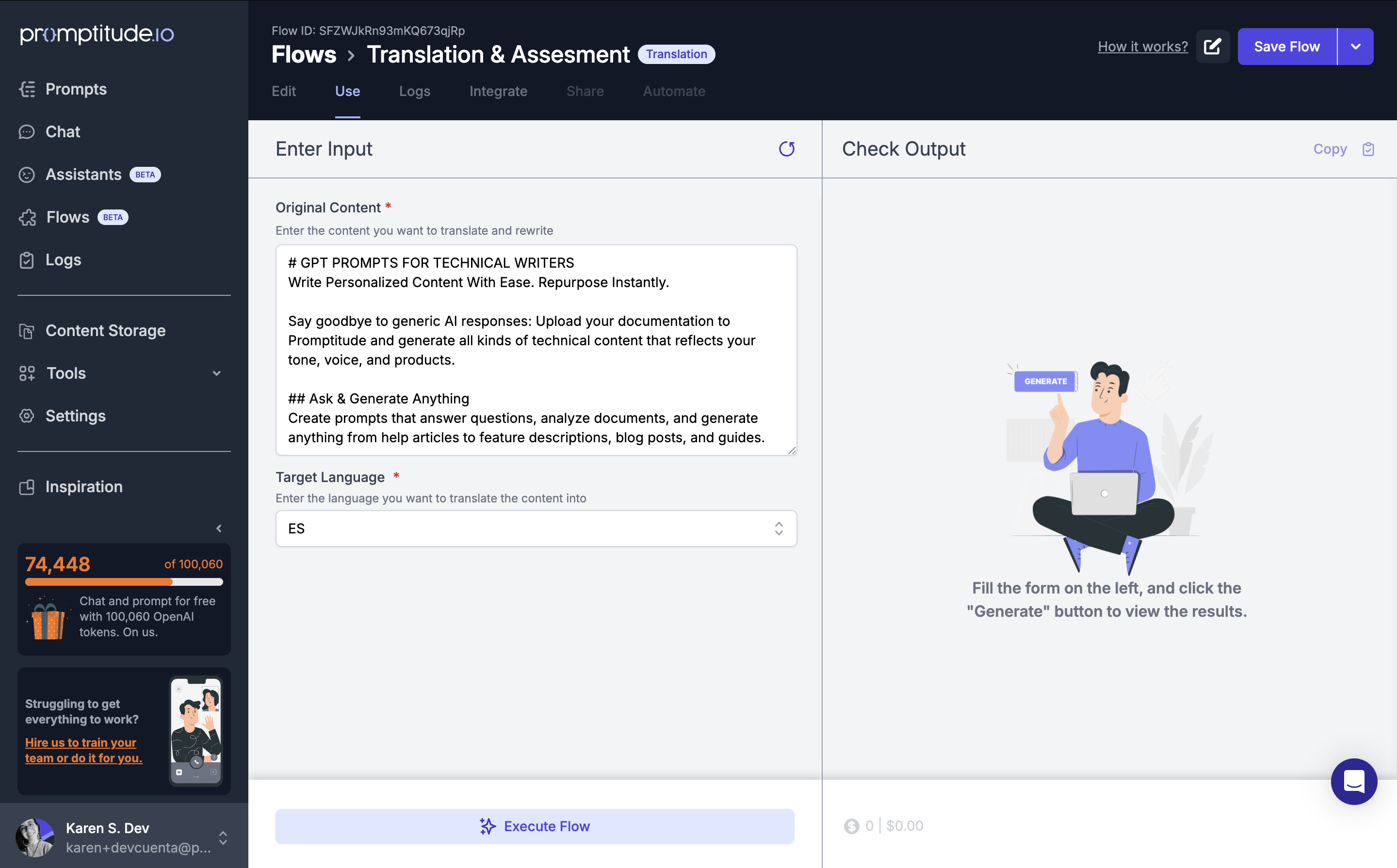
To get the most out of your Flows especially as a beginner exploring no-code AI workflow automation:
While Flows are currently in Beta with linear execution paths, we're already working on exciting enhancements:
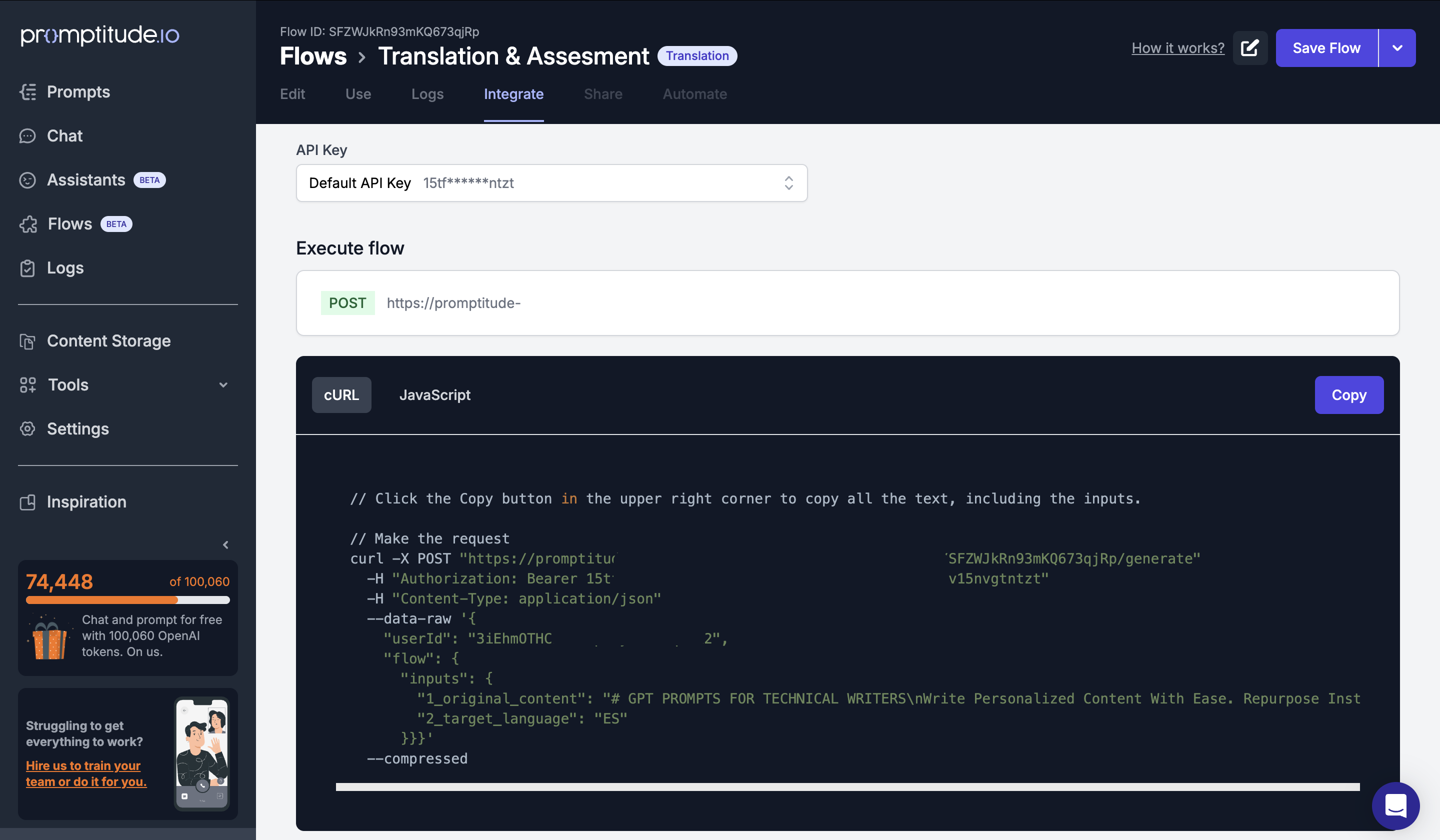
Flows mark a major milestone in how to build AI workflows without coding. By connecting your prompts into automated sequences, you'll save time, improve consistency, and create more sophisticated AI systems than ever before.
Ready to transform how you work with AI? Log in to your Promptitude account today and start building your first Flow. We can't wait to see what you create!
Have questions about Flows or need help getting started? Reach out to our support team or check out our comprehensive documentation for detailed guidance.
What is a Flow in Promptitude?
A Flow is a no-code sequence of connected steps — prompts you've created, tool integrations, or (soon) conditional logic — that execute one after another, with the output of each step passing automatically as input to the next.
How many steps can a Flow have?
During the current Beta phase, a Flow can include up to 10 steps.
Do you need to write code to build a Flow?
No. Flows are built by selecting existing prompts or tools from your account and connecting them through the dashboard interface — no coding is required.
What kinds of tasks work well as a Flow?
Multi-stage tasks work best — for example, generating an article outline, expanding each section, then polishing the final text, or extracting data from a document, transforming it, and summarizing the key points.
Does Flows support conditional logic or branching?
Not yet. Flows currently run in a linear sequence; conditional execution paths with branching logic are planned as a future update.
How should you start building your first Flow?
Start with a simple 2–3 step flow to learn how data passes between steps, then build up to more complex sequences as you get comfortable with the tool.


Easily incorporate advanced generative AI into your team, product, and workflows with Promptitude's plug-and-play solutions. Enhance efficiency and innovation effortlessly.
Sign Up Free & Discover NowErleben Sie die perfekte KI-Lösung für alle Unternehmen. Optimieren Sie Ihre Abläufe mit müheloser Prompt-Verwaltung, -prüfung und -bereitstellung. Optimieren Sie Ihre Prozesse, sparen Sie Zeit und steigern Sie die Effizienz.
Unlock AI Efficiency: 50k Free Tokens





.png)

